Yintang – Hall of Impression (EX-HN3)
A calming acupressure point for stress, sleep, headaches, and mental clarity
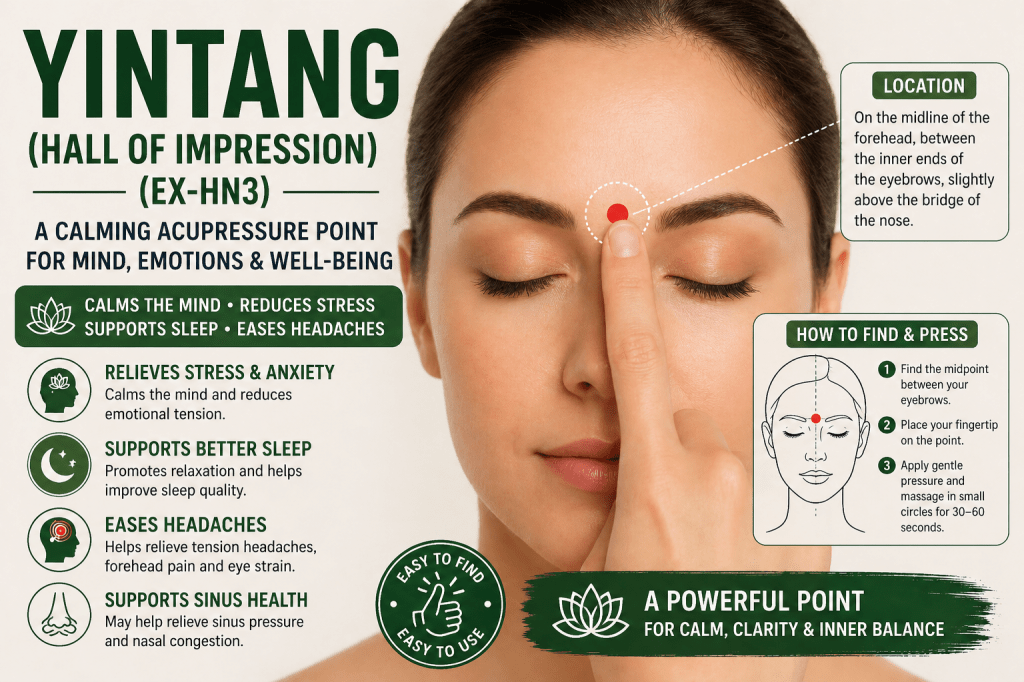
Yintang (EX-HN3) is one of the most popular extra acupuncture and acupressure points in Traditional Chinese Medicine. It is located between the eyebrows and is often used to calm the mind, reduce stress, support sleep, and ease tension headaches.
Because of its simple location and gentle effect, Yintang is one of the easiest acupressure points for beginners to use at home.
Location of Yintang
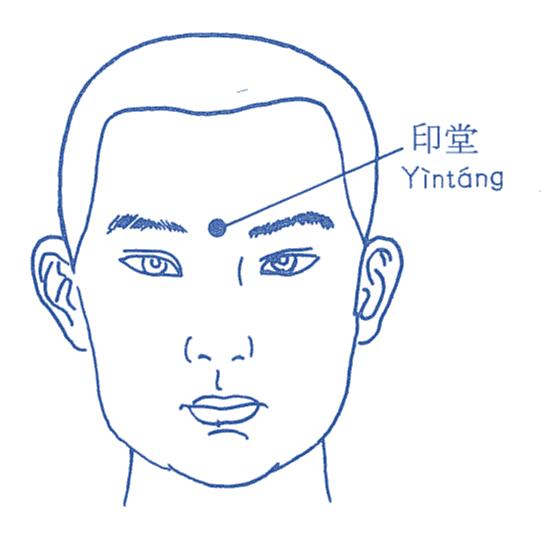
Yintang is located on the forehead, directly between the inner ends of the eyebrows.
How to find it:
- Look for the midpoint between your eyebrows.
- Place your fingertip in the small area just above the bridge of the nose.
- The point is located in the center, often where people naturally touch when they feel stressed or tired.
This point is also sometimes called the “third eye point” in modern wellness language, although its traditional Chinese name is Yintang.
Meaning of the Name “Yintang”
In Chinese:
印堂 (Yìn Táng)
- 印 (Yìn) – seal, mark, impression
- 堂 (Táng) – hall, chamber
The name “Hall of Impression” refers to the central area between the eyebrows, a place traditionally associated with mental focus, expression, and inner calm.
Point Classification
Yintang is classified as an extra point, which means it does not belong to one of the twelve primary meridians.
Its point code is:
EX-HN3
This means:
- EX – extra point
- HN – head and neck region
- 3 – point number 3 in this category
Although it is not on a main meridian, Yintang is one of the most widely used extra points in acupuncture and acupressure practice.
Main Benefits of Yintang
Stress and Anxiety Relief
Yintang is best known for its calming effect.
It is commonly used to help with:
- stress
- anxiety
- emotional tension
- restlessness
- overthinking
In TCM, it is often selected when the mind feels unsettled or when emotional tension affects sleep and relaxation.
Help yourself with stress and anxiety
Better Sleep and Relaxation
Yintang is frequently used before bed to support relaxation.
It may be helpful when someone experiences:
- difficulty falling asleep
- restless sleep
- mental overactivity
- tension before bedtime
Gentle acupressure on Yintang can become part of a calming evening routine.
Get a better sleep with this simple method
Headaches and Forehead Tension
Because of its location, Yintang is often used for frontal headaches and tension around the forehead.
It may support relief from:
- forehead headaches
- eye strain
- sinus-related pressure
- facial tension
This makes it especially useful for people who spend many hours working at a computer.
Sinus and Nasal Congestion
Yintang is also commonly used for discomfort around the nose and forehead.
It may help with:
- sinus pressure
- blocked nose
- nasal congestion
- pressure between the eyebrows
For sinus support, it is often combined with points near the nose, such as LI20.
How to Stimulate Yintang with Acupressure
Yintang is a gentle point and should not be pressed aggressively.
Step-by-step technique:
- Sit comfortably and relax your shoulders.
- Place your index finger or middle finger between your eyebrows.
- Apply light to moderate pressure.
- Massage slowly in small circles.
- Continue for 30–60 seconds.
- Breathe slowly while stimulating the point.
You can also hold the point gently without circular movement.
A soft, relaxing sensation is ideal. Sharp pain or strong pressure is not necessary.
Common Acupressure Combinations
Yintang is often combined with other points depending on the goal.
Yintang + HT7
Used for sleep, emotional calm, and restlessness.
Yintang + PC6
Used for anxiety, nausea related to stress, and chest tightness.
Yintang + LI4
Used for headaches, facial tension, and sinus pressure.
Yintang + Anmian
Used for sleep support and relaxation before bedtime.
When to Use Yintang
Yintang is a good point to use when you feel:
- mentally overstimulated
- stressed after work
- unable to relax
- tension in the forehead
- mild sinus pressure
- difficulty falling asleep
Because it is easy to locate, it is one of the most practical acupressure points for daily self-care.
Safety Considerations
Yintang is generally considered safe for gentle acupressure.
However:
- do not press too hard
- avoid using it on broken or irritated skin
- stop if you feel pain, dizziness, or discomfort
- seek professional care for severe headaches, chronic sinus problems, or persistent anxiety
Acupressure is supportive and should not replace medical care when symptoms are serious or worsening.
Why Yintang Is One of the Most Popular Acupressure Points
Yintang is popular because it is:
- very easy to find
- gentle and relaxing
- useful for stress and sleep
- directly connected with forehead and sinus tension
- simple to use without any tools
For many beginners, Yintang is one of the first points they learn because its effect is easy to feel and its location is intuitive.
Key Takeaways
- Yintang (EX-HN3) is located between the eyebrows.
- It is an extra point, not part of the twelve primary meridians.
- It is commonly used for stress, anxiety, sleep, headaches, and sinus pressure.
- Gentle pressure is better than strong pressure.
- Yintang is one of the easiest acupressure points to use at home.
 Welcome to Acupressure Guide!
Leave a comment